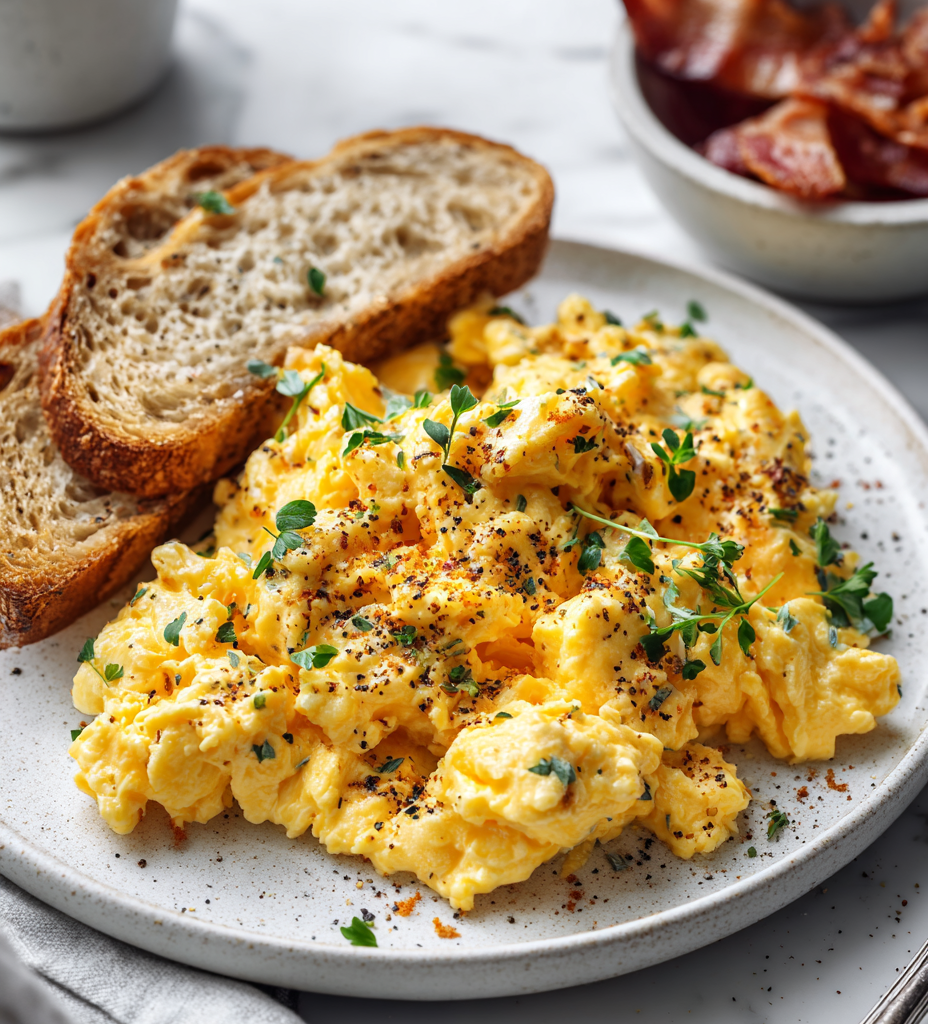
There’s something quietly satisfying about slow-cooking scrambled eggs until they transform into a silky, custard-like consistency. It’s a method that demands patience, but the reward is a breakfast that feels indulgent and comforting, not rushed or rubbery. I’ve come to cherish this approach on lazy weekend mornings when I want something special but simple to start the day.
This technique isn’t about speed; it’s about coaxing every bit of creaminess from the eggs by gentle heat and constant attention. The slow, almost meditative stirring creates a texture that’s both luxuriously tender and surprisingly forgiving. It’s a way of cooking that turns a humble dish into something unexpectedly refined, and once you get the hang of it, it’s hard to go back.
Focusing on the gentle, slow-cook method that transforms scrambled eggs into a creamy, custard-like consistency, emphasizing patience over speed.
Slow and Steady Eggs
- There’s a quiet joy in patiently stirring eggs, watching them softly set into tender curds.
- I love how slow-cooking transforms humble eggs into a rich, custardy bite that feels like a small luxury.
- Sometimes I get caught up in the chaos of morning, but this recipe reminds me to slow down and savor.
- Sharing these eggs with someone special feels like a simple act of care, made even better by their creamy texture.
- Getting the perfect scramble feels like a small, personal victory—like mastering a secret little art.
The story behind this recipe
- I stumbled upon this slow-cook method during a particularly hectic week. I was craving something rich and cozy, but didn’t want the usual rubbery scramble. One morning, I decided to turn down the heat and just listen to the eggs—watching them softly swirl and set, bit by bit. That gentle process made me realize how much patience can turn something simple into a real treat.
- Ever since, I’ve kept this method close. It’s become my go-to when I want breakfast to feel like a small act of care, not just a routine. The slow, steady stirring somehow makes the eggs feel more indulgent—like a quiet moment of luxury before the day kicks in.
- heading: The surprise of slow-cooked eggs
History and Trivia of Scrambled Eggs
- Scrambled eggs have been a breakfast staple across cultures for centuries, with variations dating back to ancient times.
- The French popularized the gentle, slow-cooked method, calling it ‘oeufs brouillés,’ emphasizing creamy, custard-like texture.
- In the early 20th century, convenience foods led to faster methods, but slow, careful cooking remains a beloved craft for many cooks.
- Eggs were once considered a symbol of fertility and rebirth, often reserved for special occasions or rituals.
- Different regions have unique twists—like adding herbs in France or tomatoes in Spain—showing the dish’s versatility.
Key Ingredients in Perfect Scrambled Eggs
- Eggs: I use large, fresh eggs for a rich, creamy base—crack them gently, and listen for that satisfying splash. If yours are a bit older, expect a slightly more rubbery texture, so consider using fresher eggs for silkier results.
- Butter: I love a generous pat of unsalted butter, melting into the eggs and adding a nutty aroma. Swap with olive oil if you want a lighter, less lush finish—just be mindful it won’t have that same velvety feel.
- Salt: A pinch of sea salt enhances the eggs’ natural flavor, making them sing. If you prefer a milder taste, start small—over-salting can drown the delicate custard-like quality.
- Cream (optional): I add a splash of heavy cream for extra silkiness and richness. Skip it or substitute with milk if you want a lighter, less decadent scramble—just expect a slightly thinner texture.
- Pepper: Freshly cracked black pepper adds a subtle kick. If you’re sensitive, start with a little, then build up—pepper’s heat is slow to develop but persistent.
- Cheese (optional): A sprinkle of soft cheese like ricotta or goat’s milk cheese makes it extra indulgent. For a sharper flavor, try a bit of aged cheddar—just fold it in at the end so it melts gently.
- Herbs (optional): Fresh chives or parsley brighten the eggs with a burst of green and freshness. Dried herbs work too but add them earlier so they rehydrate and release their aroma.
Spotlight on key ingredients
Eggs:
- I use large, fresh eggs for a rich, creamy base—crack them gently, and listen for that satisfying splash. If yours are a bit older, expect a slightly more rubbery texture, so consider using fresher eggs for silkier results.
- Butter: I love a generous pat of unsalted butter, melting into the eggs and adding a nutty aroma. Swap with olive oil if you want a lighter, less lush finish—just be mindful it won’t have that same velvety feel.
Butter:
- I love a generous pat of unsalted butter, melting into the eggs and adding a nutty aroma. Swap with olive oil if you want a lighter, less lush finish—just be mindful it won’t have that same velvety feel.
- Salt: A pinch of sea salt enhances the eggs’ natural flavor, making them sing. If you prefer a milder taste, start small—over-salting can drown the delicate custard-like quality.
Notes for ingredient swaps
- Eggs: If yours are a bit older, try adding a splash of milk or water to loosen the mixture and enhance fluffiness.
- Butter: Swap with olive oil for a lighter, slightly fruitier flavor—be mindful it won’t add that same creamy richness.
- Salt: Use sea salt or kosher salt, adjusting the quantity slightly as they can be more potent than table salt.
- Cream: Substitute with milk or plant-based creamer if you prefer a lighter, less decadent scramble—expect a thinner texture.
- Pepper: Freshly cracked black pepper is best, but a pinch of paprika or cayenne can add a subtle smoky or spicy note.
- Cheese: For dairy-free, try crumbled tofu or nutritional yeast for a cheesy flavor without dairy—both melt nicely into the eggs.
- Herbs: Dried herbs like thyme or oregano can be used if fresh aren’t available; add early to rehydrate and release aroma.
Equipment & Tools
- Non-stick skillet: Provides even heat and easy egg removal.
- Silicone spatula: Gently folds and stirs eggs without scratching the pan.
- Small bowl: Whisks eggs to combine evenly.
Perfect Scrambled Eggs Step-by-Step
- Gather your equipment: a non-stick skillet, a silicone spatula, and a small bowl. The skillet should be about 20cm (8 inches), and the heat source on low to medium-low (around 120°C / 250°F).
- Crack 3 large eggs into the bowl. Whisk gently with a fork until the yolk and whites are just combined, no streaks. Set aside.
- Add a generous knob of unsalted butter (about 1 tbsp) to the cold skillet. Turn on the heat to low and let the butter melt slowly, just until it’s foamy but not browned. This takes about 1-2 minutes.
- Pour the eggs into the skillet. Let them sit undisturbed for about 10 seconds, then start gently stirring with the spatula, pushing the eggs from the edges toward the center.
- Continue stirring slowly and steadily. Every 30 seconds, lift the spatula, fold the eggs over, and scrape the bottom. Keep the heat low—if it starts to crackle loudly or brown, reduce further.
- After about 3-4 minutes, the eggs should be mostly set but still slightly runny. Check for a silky, custard-like texture. If they’re still too wet, give them another minute, stirring gently.
- Once creamy and softly curdled, remove the pan from heat. The residual warmth will finish setting the eggs. Let them rest for 30 seconds, then give a final gentle stir.
- Plate immediately, spooning the eggs into bowls or onto toast. Finish with a pinch of sea salt or fresh herbs if desired. Serve while warm and silky.
Serve immediately while warm and creamy. Optionally, top with herbs or a sprinkle of seasoning. The eggs will continue to set off the heat, so don’t wait too long before plating.
How to Know It’s Done
- Eggs are creamy, slightly runny but not wet, with soft curds.
- Color is uniform, pale yellow with a slight sheen of butter.
- The texture is smooth and custardy, not rubbery or watery.
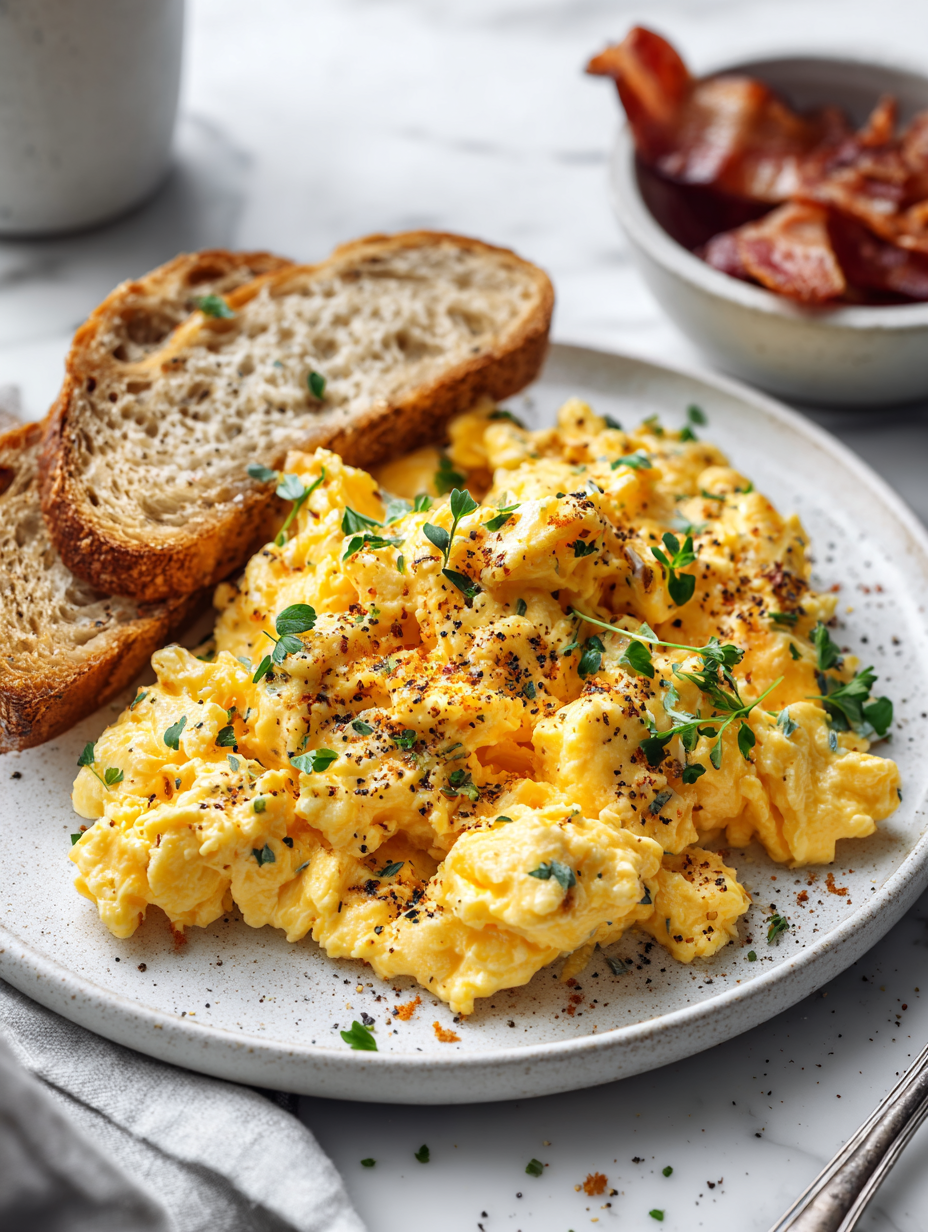
Slow-Cooked Creamy Scrambled Eggs
Ingredients
Equipment
Method
- Crack the eggs into a small bowl and gently whisk until just combined, with no streaks remaining.
- Place the non-stick skillet over low heat and add the butter. Let it melt slowly until it’s foamy but not browned, filling the air with a warm, nutty aroma.
- Pour the whisked eggs into the skillet, letting them sit undisturbed for about 10 seconds. Observe how they start to gently set around the edges.
- Begin stirring slowly with the silicone spatula, pushing the eggs from the edges toward the center, creating soft curds. Maintain low heat to keep the texture tender and creamy.
- Continue stirring steadily, making slow folds every 30 seconds. Keep the movement gentle to prevent the eggs from becoming dry or rubbery.
- After about 3-4 minutes, add the heavy cream and a pinch of sea salt, folding them gently into the eggs. Watch as the mixture becomes luxuriously smooth and velvety.
- Remove the skillet from heat just before the eggs are fully set; the residual warmth will finish cooking them to a soft, custard-like consistency.
- Give the eggs a final gentle fold, then transfer them immediately onto warm plates or toast. The eggs should be silky, moist, and softly curdled, ready to enjoy.
Notes
Pro Tips for Perfect Scrambled Eggs
- Use low heat from the start → Gently melts the butter and avoids browning, setting a tender base.
- Stir slowly and continuously → Creates creamy curds, prevents large fluffy chunks, keeps texture silky.
- Listen for gentle crackles → Indicates temperature is right; too loud means heat too high, risking rubbery eggs.
- Remove from heat slightly before eggs are fully set → Residual warmth finishes the job, ensures custardy texture.
- Incorporate butter early → Melts smoothly, infusing a rich, nutty flavor into the eggs.
- Use a silicone spatula → Gently folds eggs, prevents sticking, and maintains a smooth, even curd.
- Add a splash of cream at the end → Enhances silkiness, makes the scramble luxuriously soft without overcooking.
Common mistakes and how to fix them
- OVERBEAT: Whisk eggs too vigorously, making them frothy. Gently beat for a creamy texture.
- DUMPED: Add eggs directly to hot pan, causing rubbery curds. Always whisk eggs first, then pour.
- TOO HOT: Cook eggs on high heat, leading to tough scramble. Use low to medium-low heat for silky eggs.
- UNDERCooked: Remove eggs too early, leaving runny bits. Wait until they’re softly set and custardy.
Quick Fixes for Perfect Eggs
- If eggs turn rubbery, reduce heat and stir more gently to rescue creamy curds.
- When eggs are too dry, splash in a little milk or cream to restore silkiness.
- Dumped eggs stick and burn; switch to a non-stick pan and add butter before pouring eggs.
- Over-torched eggs develop a crust; lower the heat immediately and stir constantly to smooth texture.
- Splash cold water on the pan if eggs are overcooked; this cools and softens the eggs quickly.
Prep, store, and reheat tips
- Beat eggs in advance and keep covered in the fridge for up to 24 hours; they’ll stay fresh and ready to cook quickly.
- Prep your butter and herbs ahead—store in small containers in the fridge; bring to room temp before cooking for better melting.
- Store cooked eggs in an airtight container in the fridge for up to 2 days. Reheat gently in a low pan, stirring until warmed through and silky again.
- Reheating eggs may cause slight texture changes; add a splash of milk or butter and stir gently to restore creaminess. Expect a softer, less fluffy result.
- For best sensory experience, reheat eggs slowly until just warm, avoiding overcooking or browning, which can make them rubbery and dull in flavor.
Top questions about scrambled eggs
1. Should I use fresh eggs or are older ones okay?
Use eggs as fresh as possible; they yield a richer, creamier scramble. Older eggs tend to be rubberier and less tender.
2. What’s the best heat level for perfect scrambled eggs?
Cook on low heat slowly, stirring gently and constantly. This creates a silky, custard-like texture that’s tender and moist.
3. When should I add butter during cooking?
Add butter early in the pan on low heat, letting it melt slowly. It infuses richness and helps prevent sticking and curdling.
4. When’s the right time to take the eggs off the stove?
Remove eggs from heat just before they look fully cooked; residual warmth will finish the job and keep them silky.
5. How frequently should I stir while cooking?
Stir slowly and continuously to break up curds gently. Fast stirring or high heat causes tough, rubbery eggs.
6. What if my eggs turn out dry or rubbery?
If eggs become too dry, stir in a splash of milk or cream and cook gently for a softer, more custardy texture.
7. When should I add salt—before or after cooking?
A pinch of sea salt enhances flavor without overpowering. Season at the end to preserve the delicate custard-like texture.
8. Can I add extras like cheese or herbs while cooking?
Adding a small amount of cheese or herbs at the end can elevate flavor and add freshness to your scramble.
9. How do I reheat scrambled eggs without ruining them?
Reheat cooked eggs gently in a low pan, stirring until warmed through. Expect a softer, less fluffy texture than fresh.
10. Can I make scrambled eggs ahead of time?
Yes! Prepare the eggs in advance, store in an airtight container in the fridge for up to 24 hours, then gently reheat.
These slow-cooked scrambled eggs might seem simple, but they turn breakfast into a quiet moment of indulgence. The creamy texture, the gentle warmth—it’s a small act of care that sticks with you.
Once you get used to this method, it’s hard to settle for anything less. It’s not just about eggs; it’s about slowing down and appreciating the little, silken bites of breakfast you can create with patience.

Hi there! I’m Isabella, the founder and curious foodie behind Crumb Detective. I’ve always believed that every dish has a story to tell — from the secret family recipes passed down through generations to the bold experiments happening in kitchens around the world.