
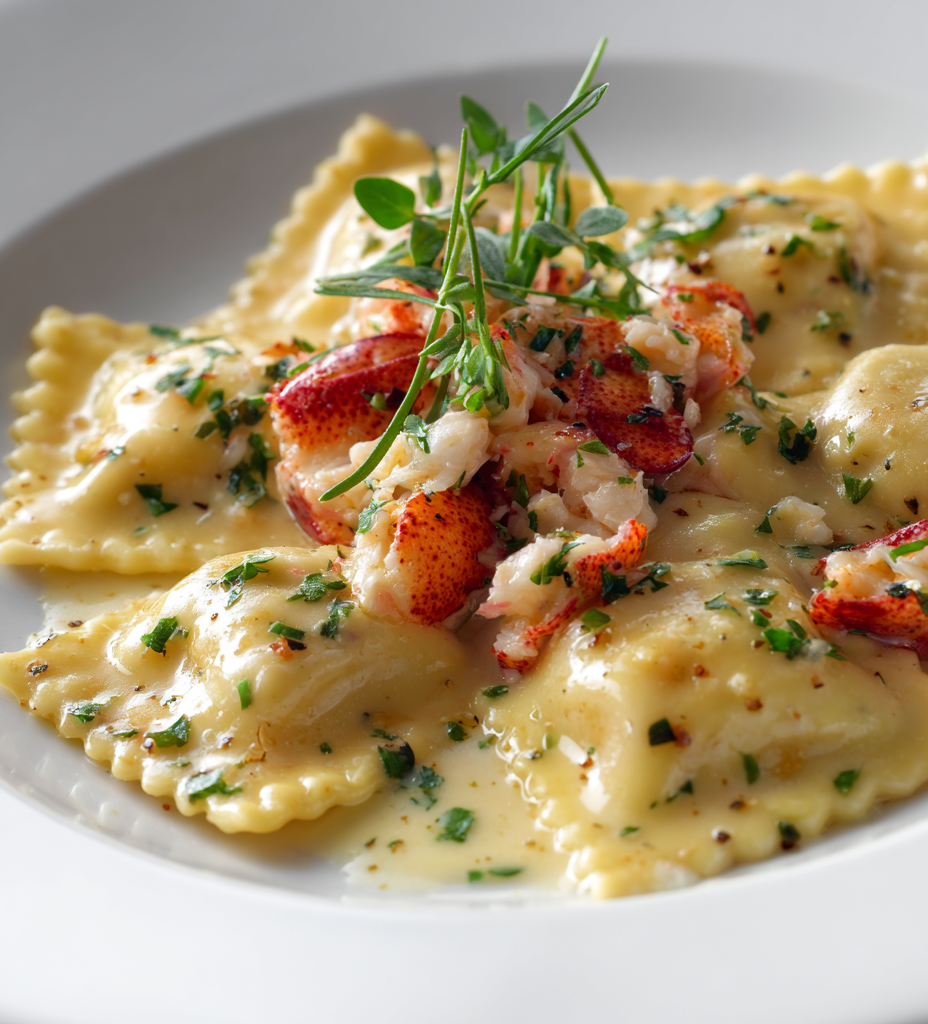
Lobster ravioli feels like a little secret I keep for special occasions—though honestly, it’s not as complicated as it sounds. There’s something about the sweet, briny lobster folded into tender pasta that makes any dinner feel like a celebration. I love taking the time to make the filling from scratch, really focusing on balancing that rich seafood flavor with just a hint of lemon or herbs.
This dish is all about the finesse of ingredients—using fresh lobster, homemade pasta, and a simple but flavorful sauce. It’s a reminder that the best meals come from a bit of patience and honest technique. When you get it right, those tiny bites burst with sweetness and a silky texture that makes the effort worth it. Plus, it’s surprisingly approachable if you break it down step by step.
Focusing on the art of balancing delicate lobster sweetness with homemade pasta, this recipe emphasizes the importance of fresh ingredients and careful technique to create a dish that feels both luxurious and approachable, perfect for special yet attainable dinners.
The hidden art of lobster pasta
- Making lobster ravioli feels like crafting a tiny seafood treasure chest; every fold is a moment of pride.
- The first time I tasted a perfectly balanced lobster filling, I knew I’d be chasing that flavor forever.
- There’s a quiet joy in rolling out fresh pasta, feeling that silky dough under your fingertips as the aroma fills the kitchen.
- I love how this dish turns simple ingredients into a luxurious experience, especially when served with a drizzle of browned butter.
The story behind this recipe
- I first stumbled upon this lobster ravioli recipe during a weekend trip to a coastal town, where fresh seafood was everywhere but nothing looked quite like this. It was the way the chef handled the lobster gently, almost reverently, that stuck with me. I started experimenting at home, trying to recreate that delicate balance of sweetness and richness.
- Over time, I realized the magic isn’t just in the ingredients but in the patience—rolling out the pasta just thin enough, folding the ravioli carefully, and making sure the lobster filling isn’t overworked. It’s a dish that demands attention, but rewards you with every bite. Now, it’s my go-to for celebrating small wins or just breaking out of a dinner rut.
- heading: The art of lobster in pasta
Lobster Ravioli Trivia
- Lobster ravioli became popular in upscale Italian-American restaurants in the 1980s, blending seafood luxury with pasta finesse.
- The tradition of stuffing pasta with seafood dates back to coastal Italy, where fresh catches inspired bold, delicate recipes.
- In some regions, lobster was once considered too precious for everyday cooking, reserved for special family celebrations or festivals.
Key Ingredients for Lobster Ravioli
- Lobster: I prefer using fresh lobster tails; the sweet briny aroma when cooked is unmatched. Swap for langoustines if lobster’s too pricey, but expect a milder flavor.
- Ricotta cheese: I mix it in for creaminess—adds a subtle sweetness that balances the lobster’s richness. Cottage cheese can work in a pinch, but it’s less silky.
- Pasta dough: I keep it simple with flour and eggs, feeling the dough become silky under my fingertips. For a lighter bite, try a touch of olive oil in the dough.
- Lemon zest: Brightens the filling with a zing I love—use fresh, not dried. Skip if you want a more subdued flavor, but I think it’s essential.
- Herbs: I love a little chopped parsley or chives; they add freshness. Dried herbs won’t give the same punch, so fresh is best for that vibrant pop.
- Egg: Binds everything together, giving the filling a silky texture. If you’re out, a splash of cream can help, but the egg really makes it come together.
- Butter: For cooking the lobster or finishing the sauce, I use unsalted butter for control. Smells like toasted nuts when browned—don’t skip this step.
Spotlight on key ingredients
Lobster:
- I prefer using fresh lobster tails; the sweet briny aroma when cooked is unmatched. Swap for langoustines if lobster’s too pricey, but expect a milder flavor.
- Ricotta cheese: I mix it in for creaminess—adds a subtle sweetness that balances the lobster’s richness. Cottage cheese can work in a pinch, but it’s less silky.
- Pasta dough: I keep it simple with flour and eggs, feeling the dough become silky under my fingertips. For a lighter bite, try a touch of olive oil in the dough.
Herbs and Lemon Zest:
- Lemon zest: Brightens the filling with a zing I love—use fresh, not dried. Skip if you want a more subdued flavor, but I think it’s essential.
- Herbs: I love a little chopped parsley or chives; they add freshness. Dried herbs won’t give the same punch, so fresh is best for that vibrant pop.
- Egg: Binds everything together, giving the filling a silky texture. If you’re out, a splash of cream can help, but the egg really makes it come together.
Notes for ingredient swaps
- Lobster: I prefer using fresh lobster tails; the sweet briny aroma when cooked is unmatched. Swap for langoustines if lobster’s too pricey, but expect a milder flavor.
- Ricotta cheese: I mix it in for creaminess—adds a subtle sweetness that balances the lobster’s richness. Cottage cheese can work in a pinch, but it’s less silky.
- Pasta dough: I keep it simple with flour and eggs, feeling the dough become silky under my fingertips. For a lighter bite, try a touch of olive oil in the dough.
- Lemon zest: Brightens the filling with a zing I love—use fresh, not dried. Skip if you want a more subdued flavor, but I think it’s essential.
- Herbs: I love a little chopped parsley or chives; they add freshness. Dried herbs won’t give the same punch, so fresh is best for that vibrant pop.
- Egg: Binds everything together, giving the filling a silky texture. If you’re out, a splash of cream can help, but the egg really makes it come together.
- Butter: For cooking the lobster or finishing the sauce, I use unsalted butter for control. Smells like toasted nuts when browned—don’t skip this step.
Equipment & Tools
- Rolling pin: To roll out the pasta dough evenly.
- Pasta machine: To achieve thin, uniform pasta sheets.
- Sharp knife or fluted cutter: To cut and shape the ravioli precisely.
- Large pot: To boil the ravioli properly.
- Slotted spoon: To gently lift cooked ravioli from boiling water.
- Skillet: To brown the butter and finish the dish.
Step-by-step guide to Lobster Ravioli
- Equip your workspace: a rolling pin, a sharp knife, a pasta machine, a small spoon, and a large pot of boiling water. Purpose: to prepare dough, fill ravioli, and cook pasta properly.
- Start by making the pasta dough: Mix 2 cups of flour with 2 beaten eggs, a pinch of salt, and a drizzle of olive oil. Knead until smooth, about 8 minutes. Wrap in plastic, rest for 30 minutes.
- While dough rests, prepare the lobster filling: Finely chop 1 cup cooked lobster meat, mix with ½ cup ricotta, 1 tsp lemon zest, chopped parsley, and a pinch of salt and pepper. Chill for 10 minutes.
- Roll out the dough: Divide into 4 portions. Use the pasta machine to roll each into a thin sheet, about 1 mm thick. Dust with flour to prevent sticking.
- Assemble ravioli: Place a teaspoon of filling every 2 inches on one sheet. Brush edges with a little water. Cover with another sheet, press around filling to seal, and cut into individual ravioli using a fluted cutter or knife.
- Cook ravioli: Bring a large pot of salted water (about 2 tbsp salt) to a boil at 100°C / 212°F. Drop in ravioli gently, cook for 3-4 minutes, until they float and are tender.
- Finish the sauce: In a skillet, melt 2 tbsp butter over medium heat until golden and fragrant. Optional: add a squeeze of lemon juice or fresh herbs for brightness.
- Serve: Gently lift cooked ravioli with a slotted spoon, place on plates, spoon over browned butter, and garnish with chopped herbs or a squeeze of lemon. Rest for 1-2 minutes before serving.
Allow the cooked ravioli to rest for 1-2 minutes on a warm plate. Finish with a drizzle of browned butter, a sprinkle of herbs, and a squeeze of lemon for bright contrast.
How to Know It’s Done
- Ravioli float to the surface and feel tender when gently pressed.
- Filling stays sealed inside without oozing out during cooking.
- Butter turns a light amber color with a nutty aroma, indicating perfect browning.
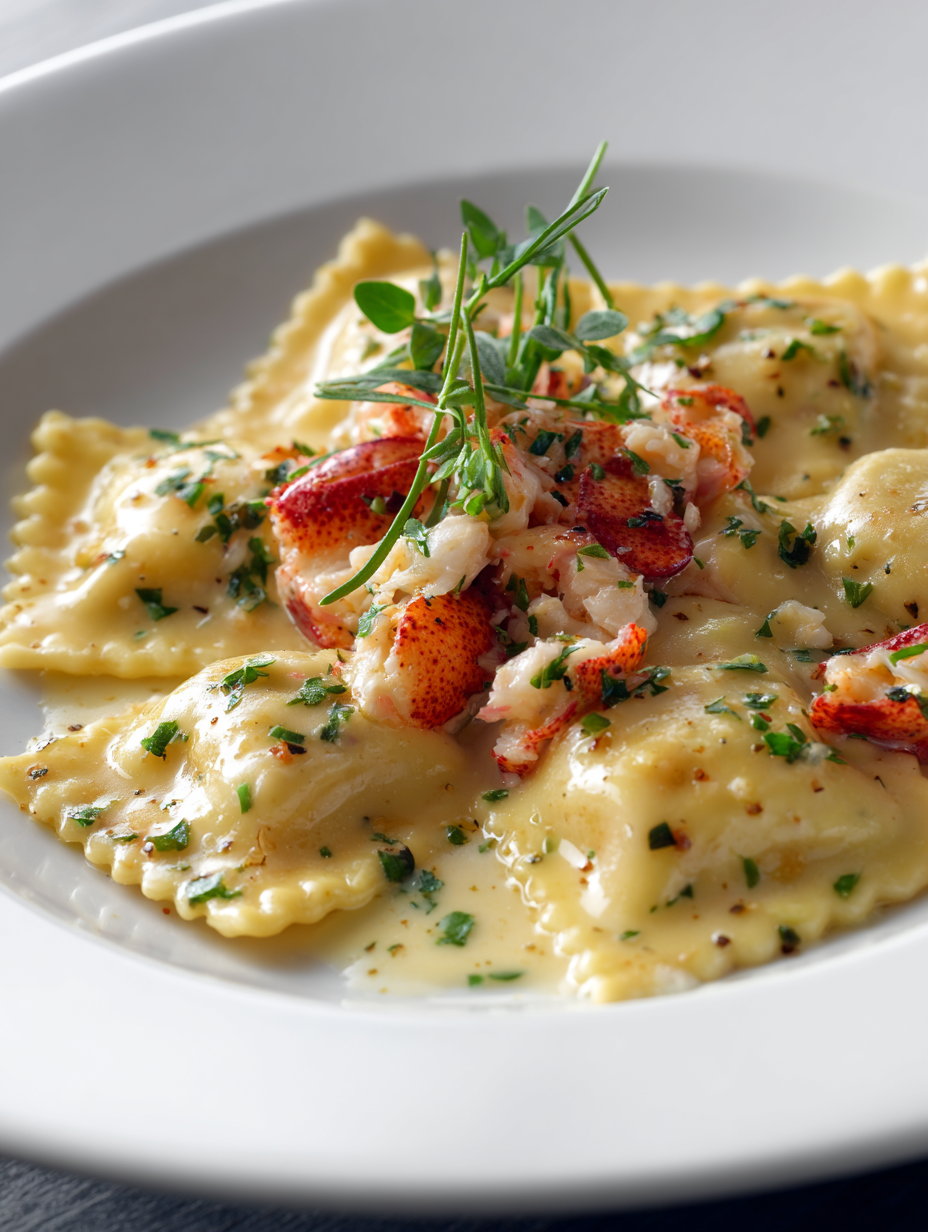
Lobster Ravioli
Ingredients
Equipment
Method
- Start by mixing the flour with a pinch of salt on a clean surface. Create a well in the center and crack the eggs into it. Use your fingers or a fork to gradually incorporate the flour into the eggs, kneading until the dough becomes smooth and elastic, about 8 minutes. Wrap in plastic and let rest for 30 minutes to relax the gluten.
- While the dough rests, prepare the filling by combining finely chopped lobster meat, ricotta cheese, lemon zest, chopped parsley, and a pinch of salt and pepper in a bowl. Mix until smooth, then chill for 10 minutes to firm up.
- Divide the rested dough into four portions. Using a pasta machine or rolling pin, roll each portion out into a thin sheet approximately 1 mm thick, dusting with flour as needed to prevent sticking. Keep the sheets covered with a damp cloth to prevent drying out.
- Place small teaspoons of the lobster filling evenly spaced over one sheet of pasta, leaving about 2 inches between each. Moisten the edges around the filling with a little water to help seal.
- Cover with a second pasta sheet and gently press around each mound of filling to eliminate air and ensure a good seal. Using a fluted cutter or knife, cut into individual ravioli, sealing the edges tightly.
- Bring a large pot of salted water to a boil. Carefully drop in the ravioli and cook for about 3-4 minutes, or until they float to the surface and feel tender. Use a slotted spoon to gently lift them out and set aside.
- In a skillet, melt the butter over medium heat until it begins to turn a light golden brown and releases a nutty aroma, about 2-3 minutes. This browned butter will add depth and richness to your dish.
- Gently add the cooked ravioli to the skillet and toss to coat them in the browned butter. Let them cook for another minute until heated through and slightly crispy on the edges.
- Serve the lobster ravioli hot, garnished with additional chopped parsley or a squeeze of lemon if desired. Enjoy the silky, flavorful bites that are perfect for a special occasion or a cozy night in.
Pro Tips for Perfect Lobster Ravioli
- Bolded mini-head: Use a pasta machine for consistent thinness—feels silky and easy to handle.
- Bolded mini-head: Seal edges thoroughly—dampening with water helps prevent leaks during boiling.
- Bolded mini-head: Cook ravioli in gently boiling water—watch for floating, which indicates doneness.
- Bolded mini-head: Brown butter until it turns a light amber—smells nutty and adds depth to the dish.
- Bolded mini-head: Chill the filling before assembling—helps it stay firm and easier to pipe or spoon.
- Bolded mini-head: Rest the dough for at least 30 minutes—makes rolling out smoother and pasta more tender.
- Bolded mini-head: Use fresh herbs and lemon zest—brightens the filling and enhances flavor contrast.
Common Lobster Ravioli Mistakes
- FORGOT to seal ravioli properly → Use a little water around edges to prevent leaks.
- DUMPED filling into water → Drop ravioli gently to avoid tearing or sticking.
- OVER-TORCHED butter → Remove from heat once golden and fragrant to prevent bitterness.
- MISSED resting dough → Rest for at least 30 minutes for easier rolling and better texture.
Quick fixes and pantry swaps
- If sauce shimmers too much, splash in a bit of water to calm the oil.
- When ravioli stick, dust with more flour or chill before cooking.
- DUMPED filling in water? Gently scoop and pat dry before sealing again.
- Over-torched butter? Remove from heat immediately and add a splash of lemon juice.
- When in doubt, pantry swap lobster with cooked shrimp for a quick fix.
Prep, store, and reheat tips
- Prepare the lobster filling and keep it chilled in the fridge for up to 24 hours. The flavors meld beautifully overnight, making assembly easier.
- Make and rest the pasta dough at least 30 minutes ahead; wrapped tightly in plastic, it stays fresh in the fridge for up to a day.
- Assembled but uncooked ravioli can be frozen on a baking sheet, then stored in a zip-top bag for up to 2 months. No thawing needed—just cook straight from frozen.
- Reheat cooked ravioli gently in simmering water or a warm butter sauce; avoid overheating to prevent tearing or drying out. Expect delicate, tender bites with a slightly fresher aroma.
- For leftovers, store in an airtight container in the fridge for up to 1 day; reheat gently to preserve the tender texture and subtle seafood aroma.
Lobster Ravioli FAQs
1. Can I use frozen lobster for ravioli?
Fresh lobster gives the best flavor and texture, with a sweet, briny aroma that’s unmistakable. Frozen can work in a pinch but won’t be quite as tender or vibrant.
2. What seafood can I use instead of lobster?
Yes, you can substitute langoustines or large shrimp if lobster is too expensive or hard to find. The flavor will be milder but still delicious.
3. How thin should the pasta sheets be?
Make sure your pasta dough is rolled very thin—about 1 mm—so it’s tender and melts in your mouth, not chewy or tough.
4. How do I know when the ravioli are cooked?
Cook the ravioli until they float to the surface and feel tender when gently pressed, usually 3-4 minutes in boiling water.
5. How should I finish the sauce?
Brown the butter until it turns a light amber color and smells nutty—this adds a rich, toasty flavor that complements the lobster perfectly.
6. Can I skip the lemon or herbs?
Use fresh lemon zest and herbs like parsley or chives to brighten and add freshness to the filling and dish overall.
7. How do I prevent the ravioli from leaking?
Seal the edges well with a damp brush or finger to prevent filling from leaking out during boiling.
8. Can I make ravioli ahead of time?
You can prepare the filling and dough ahead of time, store in the fridge, and assemble just before cooking. Just keep everything covered tightly.
9. What if my butter burns?
If your butter burns or turns bitter, remove from heat immediately and add a squeeze of lemon to mellow the flavor.
10. How do I fix sticking or tearing ravioli?
If ravioli stick or tear, dust with more flour or chill them briefly before boiling. Gently handle to keep their shape.
Making lobster ravioli feels like a small act of craftsmanship—each fold and fold is a quiet achievement. When those tender bites burst with that sweet, briny lobster flavor, I’m reminded why I love cooking at home. It’s a dish that demands patience but delivers a moment of pure pleasure with every plate.
In a world that rushes by, this recipe is a reminder to slow down and savor the details—fresh ingredients, honest technique, and a little bit of effort. It’s a special treat, but one that’s surprisingly accessible, especially when you break it down step by step. Sometimes, the simplest dishes become the most memorable.

Hi there! I’m Isabella, the founder and curious foodie behind Crumb Detective. I’ve always believed that every dish has a story to tell — from the secret family recipes passed down through generations to the bold experiments happening in kitchens around the world.