
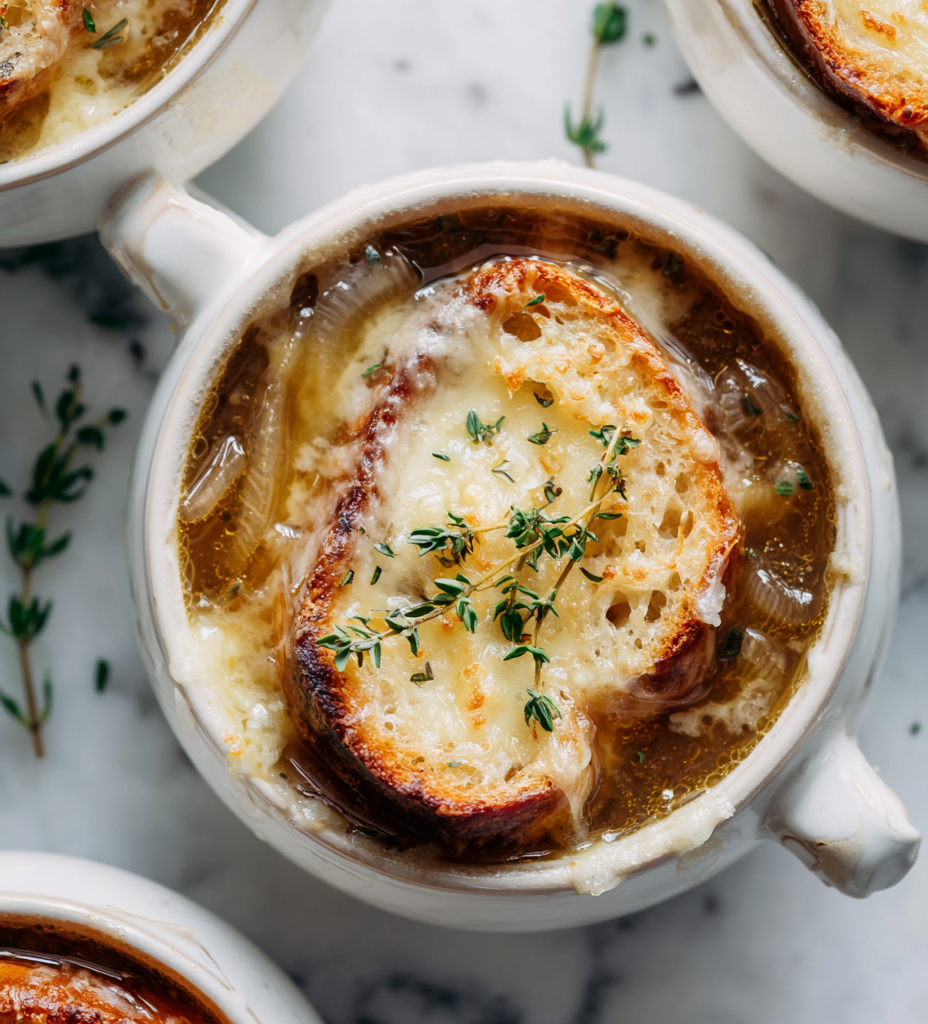
Focusing on the caramelization process really changes how you see this classic soup. Watching onions slowly turn from sharp white to a deep, sweet brown is like witnessing a quiet transformation. It’s patience, yes, but that patience rewards you with a richness that can’t be rushed.
Every time I make French Onion Soup, I remember how simple ingredients—onions, broth, bread, cheese—can come together with just a little time and care. It’s a humble dish, but it demands respect for its slow, almost meditative process. That caramelized sweetness stays with you long after the last spoonful.
This isn’t a quick fix, but it’s honest, real cooking. It’s about creating layers of flavor that develop over caramelization, not shortcuts. And honestly, it’s those quiet moments of stirring and watching that make the final bowl so satisfying to dig into.
Focusing on the caramelization process to highlight how slow, patient browning transforms simple onions into a rich, sweet base that defines the soul of the soup.
The patience behind perfect caramelization
- Caramelizing the onions gently fills the kitchen with a sweet, smoky aroma that feels like a warm hug.
- Watching the onions turn from sharp white to deep brown is a slow, meditative process I’ve come to cherish.
- There’s a quiet pride in transforming humble ingredients into something so richly flavorful with patience and care.
- The first spoonful of this soup always takes me back to childhood kitchens filled with the scent of melting cheese and caramelized onions.
- Making this dish is a reminder that good things often take time—something I forget in today’s rush.
The story behind this recipe
- This recipe came about during a chilly autumn evening when I was craving something soul-warming but didn’t want to fuss over complicated ingredients. I remembered my grandma’s version, which was simple, honest, and layered with caramelized onions and a splash of sherry for depth. It’s one of those dishes that feels like a hug after a long day, especially when the kitchen fills with that sweet, smoky aroma.
- Every time I make it, I think about how humble ingredients—onions, broth, bread, cheese—can come together with patience and a bit of love. It’s a slow dance of flavors, where each step of caramelization adds a new layer of richness. That quiet process, watching onions turn from sharp white to deep brown, somehow makes the final bowl all the more satisfying. It’s a reminder that good things often take time, and that’s okay.
- It’s not just about the taste; it’s about the ritual, the patience, and the small joys found in slow cooking. This soup has become my go-to comfort, especially on the coldest days when warmth isn’t just physical but something you feel deep inside.
Historical & Quirky Facts
- French Onion Soup dates back to ancient Rome, where a similar onion broth was served to soldiers to boost energy.
- The modern version of the soup gained popularity in Paris in the 18th century, often served in cafes with crusty bread and melted cheese.
- Traditionally, caramelizing onions was a labor of love, sometimes taking over an hour to develop their deep, sweet flavor.
- In France, this dish was considered humble peasant fare, but it became a symbol of comfort and culinary finesse over time.
- The use of Gruyère cheese in the classic topping is a nod to Swiss influences, adding a nutty, smoky richness.
Key Ingredients and Tips
- Yellow onions: I love the sweetness they develop as they caramelize, but if yours are a bit sharp, a sprinkle of sugar helps. Use a gentle heat—around medium—until they turn a deep amber and smell like burnt sugar and roasted nuts.
- Beef broth: I prefer homemade or a rich store-bought version, but chicken or veggie broth works too. Look for one with a meaty, umami aroma—skip the overly salty or artificial-tasting options. It’s the foundation for that deep, savory backbone.
- Butter: I stick to unsalted for control, but a splash of olive oil can add a fruity note. Watch it melt and foam—this is when the onions start to soften and release their sugars. Keep the heat moderate to avoid burning.
- Dry white wine or sherry: Adds a bright, slightly acidic punch that balances the sweetness. Don’t skimp—use a decent splash (about half a cup). When it hits the hot pan, it should shimmer and deglaze, lifting all those flavorful browned bits.
- Baguette or rustic bread: I like crusty, thick slices for topping. Toast them just until they’re golden and slightly firm—this prevents sogginess and adds a satisfying crunch with each spoonful. Rub a garlic clove for extra flavor if you like.
- Gruyère cheese: I love the nutty, smoky notes it adds, but Swiss or Comté are good swaps. Grate it fine, then sprinkle generously over the bubbling soup. The cheese should melt into a gooey, bubbly, golden layer that pulls apart with a satisfying stretch.
- Fresh thyme: Just a sprig or two, chopped fine. I add it during the simmer to infuse a gentle herbal aroma, but you can skip if you prefer a cleaner onion flavor. It’s a subtle, fragrant boost that rounds out the richness.
Spotlight on key ingredients
Yellow onions:
- I love how they soften and turn sweet as they caramelize, releasing a rich aroma. You want a deep golden hue, not burnt, with a smell like roasted nuts and burnt sugar.
- Gruyère cheese: I adore its nutty, smoky notes that melt into a bubbly, golden blanket over the soup. It should stretch satisfyingly when served, with a slight crackle as it cools slightly.
Broth & wine:
- Beef broth: I prefer a robust, homemade version that adds a deep umami. It should smell meaty and rich, not overly salty or artificial—your flavor foundation.
- White wine/sherry: Adds brightness and acidity, shimmering when poured. The aroma should be fresh and slightly fruity, balancing the sweetness of the onions as it deglazes the pan.
Notes for ingredient swaps
- Dairy-Free: Use a plant-based cheese or omit cheese altogether. The soup will be less gooey but still flavorful with caramelized onions and broth.
- Vegetarian: Swap beef broth for mushroom or vegetable broth. It deepens the umami without the meat, though it may lack some richness.
- Low-Sodium: Choose low-sodium broth and reduce added salt. The caramelized onions bring natural sweetness that helps balance the flavors.
- Gluten-Free: Use gluten-free bread or omit the bread topping. You can add a crispy roasted potato slice for texture instead.
- Vegan: Skip cheese or use a vegan cheese alternative. Ensure broth is vegetable-based. The flavor remains rich if caramelized onions are well-cooked.
- Sweet Onions: If yellow onions aren’t available, use shallots or red onions. They caramelize beautifully and add a slightly different sweetness, which can be very charming.
- White Onions: For a sharper, more pungent flavor, opt for white onions. They caramelize well but bring a slightly different aromatic profile.
Equipment & Tools
- Heavy-bottomed pot or Dutch oven: For even heat distribution and slow caramelization.
- Wooden spoon: For stirring onions gently without sticking.
- Baking sheet: To toast bread slices evenly.
- Oven-safe bowls or crocks: To assemble and broil the soup toppings.
Step-by-step guide to French Onion Soup
- Gather your equipment: a large heavy-bottomed pot or Dutch oven, a wooden spoon, a baking sheet, and oven-safe bowls or crocks for serving.
- Peel and slice 4-5 large yellow onions thinly, about ¼ inch. Uniform slices help even caramelization.
- Heat the pot over medium heat. Add 2 tablespoons unsalted butter and a splash of olive oil to prevent burning. When melted and foaming, add the onions.
- Stir frequently, lowering heat if onions start to brown too quickly. Cook for about 30-40 minutes, stirring every 5-7 minutes, until onions are deeply golden and smell sweet and nutty.
- Pour in ½ cup dry white wine or sherry, stirring to deglaze the pan, scraping up browned bits. Let simmer for 2-3 minutes until alcohol cooks off.
- Add 4 cups beef broth (or preferred stock), a sprig of fresh thyme, a pinch of salt, and black pepper. Bring to a gentle simmer.
- Reduce heat to low and simmer uncovered for another 20-30 minutes. The onions should be tender, and the broth rich with caramelized flavor.
- Meanwhile, preheat your oven to 200°C (390°F). Slice a baguette into ½ inch thick rounds. Toast on a baking sheet until golden and slightly crispy, about 8-10 minutes.
- Ladle soup into oven-safe bowls or crocks. Top each with a toasted bread slice and a generous handful of grated Gruyère cheese.
- Place bowls on a baking sheet and broil about 3-5 minutes, or until the cheese is bubbly and golden brown. Keep an eye to prevent burning.
- Remove from oven carefully, let sit for a minute to settle, then serve hot with extra bread on the side if desired.
Let the soup sit off the heat for a minute. Serve immediately, ensuring the cheese is gooey and bubbling. Garnish with a sprig of thyme if desired.
How to Know It’s Done
- Onions are deeply caramelized, rich in color, and smell sweet and roasted.
- The broth is dark, flavorful, and slightly thickened from simmering.
- Cheese topping is bubbly and golden, with a slight stretch when served.
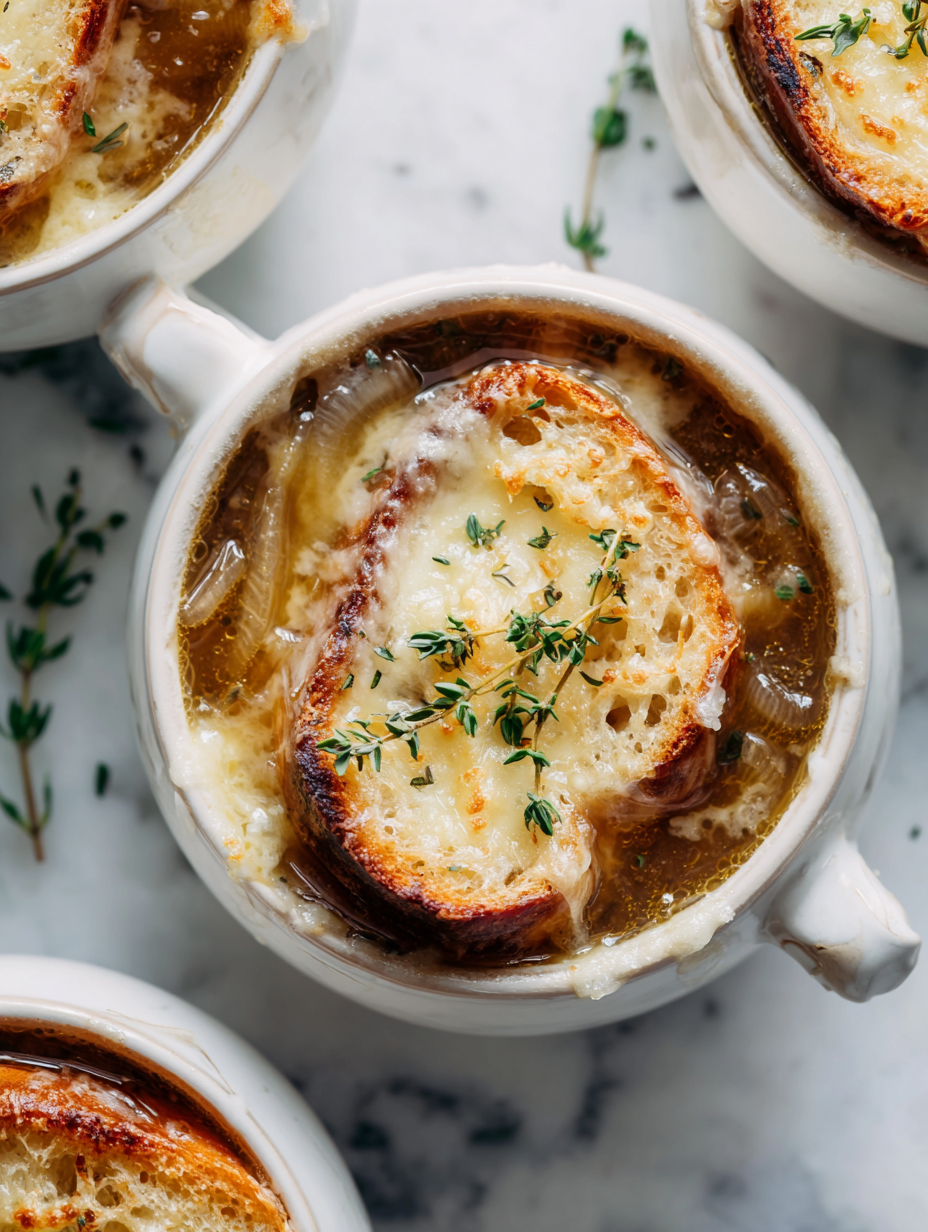
French Onion Soup
Ingredients
Equipment
Method
- Peel and thinly slice the yellow onions, aiming for uniform slices that will caramelize evenly.
- Heat your heavy-bottomed pot over medium heat, then add the butter along with a splash of olive oil. Once melted and foaming, add the sliced onions and stir to coat them in the butter and oil mixture.
- Cook the onions slowly, stirring frequently, for about 30-40 minutes. Keep the heat moderate; you want the onions to soften and gradually turn a deep golden brown with a sweet aroma filling the kitchen.
- Pour in the white wine or sherry, then stir to deglaze the pan, scraping up all the browned bits from the bottom. Let the wine simmer for 2-3 minutes until it reduces slightly and the aroma is intensified.
- Add the beef broth along with a sprig of thyme, salt, and pepper. Bring the mixture to a gentle simmer, then reduce heat to low and cook uncovered for another 20-30 minutes, allowing flavors to meld and broth to deepen in color.
- While the soup simmers, preheat your oven to 200°C (390°F). Slice the baguette or rustic bread into ½ inch rounds and toast on a baking sheet until golden and crisp, about 8-10 minutes.
- Remove the thyme sprig from the soup and taste, adjusting seasoning as needed. Ladle the hot soup into oven-safe bowls or crocks.
- Top each bowl of soup with a toasted bread slice, then sprinkle generously with grated Gruyère cheese. Place the bowls on a baking sheet and broil in the oven until the cheese is bubbly and golden brown, about 3-5 minutes.
- Carefully remove the bowls from the oven once the cheese is melted and bubbling. Let sit for a minute to cool slightly, then serve hot, garnished with a sprig of thyme if desired.
Pro tips for perfect French Onion Soup
- Low and slow: Caramelize onions over gentle heat, stirring often for deep, sweet flavor without burning.
- Use a wide pan: A large surface area helps onions cook evenly and caramelize uniformly without steaming.
- Deglaze generously: Pour in wine or sherry to lift browned bits—boosts flavor and adds a glossy finish.
- Cheese at the end: Broil just until bubbling and golden; avoid overcooking to prevent burning and tough cheese.
- Taste as you go: Adjust salt and pepper gradually—caramelized onions are naturally sweet, so balance carefully.
- Bread crunch: Toast bread slices until crisp before topping; soggy bread ruins the texture and flavor.
- Rest briefly: Let the soup sit a minute after broiling to settle flavors and avoid hot cheese burns.
Common mistakes and how to fix them
- FORGOT to add enough onions → Use a generous amount for deep flavor.
- DUMPED too much broth → Keep to the recipe’s ratio for balanced richness.
- OVER-TORCHED the cheese → Broil just until bubbly and golden, watch closely.
- SKIPPED caramelizing onions thoroughly → Patience is key for sweetness and depth.
Quick fixes and pantry swaps
- If onions burn, splash in a bit of water to stop the charring.
- When broth is too salty, add a peeled potato to absorb excess salt.
- Dumped bread soggy? Patch it with crispy toasted slices instead.
- Over-torched cheese? Shield with a quick sprinkle of fresh cheese and broil briefly.
- When onions aren’t caramelizing, rescue with a pinch of sugar and low heat.
Prep, store, and reheat tips
- Caramelized onions can be made a day ahead; store in an airtight container in the fridge for up to 24 hours. Their sweet aroma perks up the kitchen when reheated.
- Soup base (broth and onions) can be refrigerated for 2-3 days. Reheat gently on low, allowing the flavors to meld again without losing their depth.
- To freeze, cool the soup completely, transfer to a freezer-safe container, and store for up to 3 months. Thaw overnight in the fridge and reheat slowly, watching for separation or excess saltiness.
- Reheat in a pot over low heat, stirring occasionally. The soup should shimmer and smell rich and inviting. Add a splash of water or broth if it thickens too much during reheating.
- To keep the cheese topping crisp, add cheese just before broiling. Reheated soup with cheese may lose some crispness, but the gooey richness remains satisfying.
Top questions about French Onion Soup
1. How do I know when the onions are caramelized enough?
Look for onions that are deeply caramelized, with a rich, sweet smell and a dark golden-brown color. They should be soft and slightly sticky when stirred.
2. Can I use chicken or vegetable broth instead of beef broth?
Use a good quality beef broth for deep flavor, or vegetable broth for a lighter, vegetarian version. It should smell savory and rich, not overly salty or artificial.
3. How do I get the cheese topping just right without burning it?
Broil the cheese-topped bowls until the cheese is bubbly and golden, about 3-5 minutes. Keep an eye so it doesn’t burn.
4. What’s the best way to toast the bread for topping?
Toast the bread slices until they are golden and crispy, about 8-10 minutes. They should be firm enough to hold up in the soup without sogginess.
5. Can I substitute Gruyère with another cheese?
Use a sharp, nutty Gruyère or Swiss cheese, grated finely. It should melt into a bubbly, slightly crispy layer that stretches when served.
6. Why add wine or sherry to the soup?
Deglazing with wine or sherry should shimmer and loosen browned bits, adding brightness and depth to the broth.
7. Can I prepare the onions ahead of time?
Store caramelized onions in an airtight container in the fridge for up to 24 hours. Reheat gently to preserve their sweetness and aroma.
8. How do I reheat and reassemble the soup?
Reheat the soup slowly over low heat, stirring occasionally. The flavors should shimmer and smell savory, with the cheese bubbling and golden after broiling.
9. What if my soup is too salty after cooking?
If the broth becomes too salty, add a peeled potato during simmering to absorb excess salt. Remove before serving.
10. Why aren’t my onions caramelizing properly?
When onions aren’t caramelizing well, lower the heat and add a pinch of sugar, then stir patiently until they turn deep amber.
This soup is more than just a comforting bowl; it’s a reminder that patience and simple ingredients can create something truly satisfying. The slow caramelization brings out flavors that linger long after the last spoonful, filling the kitchen with a warm, smoky aroma.
In a world that moves fast, taking the time to build layers of flavor like this feels grounding. It’s a dish that celebrates quiet moments and the small joys of good, honest cooking—perfect for cozy evenings or whenever you need a little extra warmth.

Hi there! I’m Isabella, the founder and curious foodie behind Crumb Detective. I’ve always believed that every dish has a story to tell — from the secret family recipes passed down through generations to the bold experiments happening in kitchens around the world.