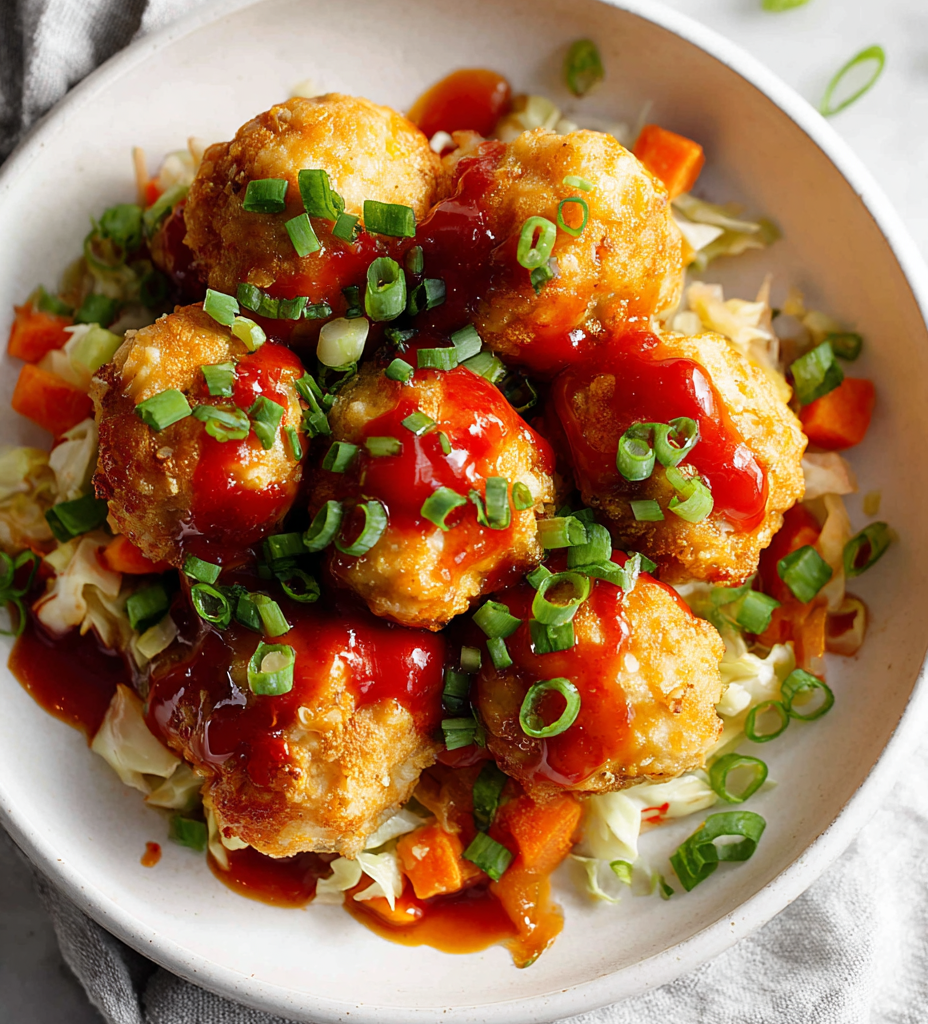
Making Vegetable Manchurian at home feels like a warm hug from childhood street food stalls. There’s something about shaping those imperfect, hand-formed balls, each with a slightly charred edge, that brings back memories of busy evenings and spicy aromas wafting through the air. It’s a messy, spontaneous process, but that’s exactly what makes it feel real and comforting.
This recipe isn’t about perfection; it’s about capturing that nostalgic, unpolished essence—crispy on the outside, tender inside, with a tangy, savory coating that makes every bite memorable. I love how it transforms simple vegetables into something lively and satisfying, perfect for sharing with friends or just a solo cozy night in.
Making Vegetable Manchurian at home feels like a warm hug from childhood street food stalls. There’s something about shaping those imperfect, hand-formed balls, each with a slightly charred edge, that brings back memories of busy evenings and spicy aromas wafting through the air. It’s a messy, spontaneous process, but that’s exactly what makes it feel real and comforting.
This recipe isn’t about perfection; it’s about capturing that nostalgic, unpolished essence—crispy on the outside, tender inside, with a tangy, savory coating that makes every bite memorable. I love how it transforms simple vegetables into something lively and satisfying, perfect for sharing with friends or just a solo cozy night in.
Focusing on the nostalgic warmth of homemade Vegetable Manchurian, this recipe emphasizes the imperfect, hand-formed balls and the spontaneous, slightly charred edges that make each batch uniquely comforting, echoing childhood street food memories.
Nostalgic street food comfort
- Shaping the balls by hand feels oddly satisfying, like creating little edible sculptures from childhood memories.
- The smell of garlic and soy sizzling together always takes me back to my grandma’s kitchen, chaotic and warm.
- Getting that perfect crispy edge on each piece took a few tries, but now it’s my favorite part of the process.
- There’s a messy joy in tossing everything together last minute — it’s improvised, just like street food used to be.
- Every time I make this, I remember those spontaneous snack stalls that felt like secret gatherings of flavor.
The story behind this recipe
- This Vegetable Manchurian recipe is born out of countless evenings spent trying to replicate that street food magic at home. I remember the first time I tried to shape those vegetable balls—messy, uneven, but so full of potential. It’s a dish that feels unpolished, just like the street stalls I used to pass by, with their smoky aroma wafting through the air.
- Over time, I realized it’s not about perfect shapes or glossy sauces. It’s about capturing that spontaneous, slightly chaotic vibe—the crackle of frying, the tangy sauce clinging to each bite, the imperfectly round, crispy edges that remind me of childhood evenings. Making it is as much about the process as the final taste, and that keeps it special every single time.
- heading
Historical and Cultural Trivia
- Vegetable Manchurian has roots in Indo-Chinese cuisine, blending local vegetables with Chinese-inspired sauces.
- It gained popularity in Indian street food culture during the 1970s, adapting Chinese dishes to local tastes.
- The dish is a testament to culinary fusion—combining tangy, spicy, and savory flavors in a single bite.
Ingredient breakdown
- Cabbage: I love how it adds a gentle crunch, almost like the vegetable’s secret handshake in every bite. Swap with shredded kale if you want a slightly earthier flavor.
- Carrots: Their natural sweetness balances the savory, and the vibrant orange makes the mixture lively. Try daikon for a milder, less sweet crunch.
- Garlic: The aroma of minced garlic sizzling in oil is my favorite part—pungent and inviting. Use roasted garlic for a sweeter, mellow note.
- Soy Sauce: It gives that deep umami punch with a salty, smoky edge. Light soy can be replaced with coconut aminos for a sweeter, less intense flavor.
- Cornstarch: It creates that crisp exterior when frying—think of it as the secret to the crunch. Rice flour can be a good gluten-free alternative, though slightly less crispy.
- Ginger: Fresh ginger’s zing energizes the whole dish, with a sharp, spicy brightness. Dried ginger powder works if fresh isn’t available, but tone down the amount.
- Oil: I prefer neutral oils like vegetable or canola for frying—clean, crisp results. Use sesame oil in the sauce for added aroma, but sparingly to avoid overpowering.
Spotlight on key ingredients
Cabbage:
- I love how it adds a gentle crunch, almost like the vegetable’s secret handshake in every bite. Swap with shredded kale if you want a slightly earthier flavor.
- Carrots: Their natural sweetness balances the savory, and the vibrant orange makes the mixture lively. Try daikon for a milder, less sweet crunch.
- Ginger: Fresh ginger’s zing energizes the whole dish, with a sharp, spicy brightness. Dried ginger powder works if fresh isn’t available, but tone down the amount.
Soy Sauce:
- Cornstarch: It creates that crisp exterior when frying—think of it as the secret to the crunch. Rice flour can be a good gluten-free alternative, though slightly less crispy.
- It gives that deep umami punch with a salty, smoky edge. Light soy can be replaced with coconut aminos for a sweeter, less intense flavor.
- Oil: I prefer neutral oils like vegetable or canola for frying—clean, crisp results. Use sesame oil in the sauce for added aroma, but sparingly to avoid overpowering.
Notes for ingredient swaps
- Vegetables: I often swap cabbage for shredded kale or bok choy for a slightly different crunch and earthiness. Feel free to experiment with zucchini for a softer bite.
- Cornstarch: It’s key for crispness, but rice flour works as a gluten-free alternative, though it may not be quite as crispy. Tapioca starch can also add a nice chew.
- Soy Sauce: I prefer regular soy for that deep umami, but coconut aminos make a sweeter, milder swap if you want less salt and soy flavor.
- Oil: Neutral oils like vegetable or canola are my go-to for frying—clean and crisp. If you want a hint of aroma, sesame oil in the sauce adds a nice smoky note.
- Ginger: Fresh ginger gives a sharp, zesty hit, but dried ginger powder can work in a pinch—just use half the amount to avoid overpowering.
- Sweetener: If you want a touch of sweetness, a dash of honey or maple syrup can balance the savory sauce. Adjust to taste, but keep it subtle.
- Sauce Thickener: If you prefer a thicker sauce, add a tiny bit more cornstarch dissolved in water. For a thinner glaze, skip the extra thickener and simmer longer.
Equipment & Tools
- Large mixing bowl: Combine vegetables and form mixture
- Deep frying pan or wok: Fry the vegetable balls
- Slotted spoon: Remove fried balls from oil
- Small saucepan: Prepare the sauce
- Knife and grater: Chop and grate ingredients
Step-by-step guide to Vegetable Manchurian
- Equipment & Tools: Prepare a large mixing bowl for the vegetable mixture, a deep frying pan or wok for frying, a slotted spoon for transferring, and a small saucepan for the sauce.
- Finely chop or grate the cabbage, carrots, and bell peppers. Mix them in the bowl with minced garlic and grated ginger. Add a splash of soy sauce and a pinch of salt. Let sit for 10 minutes to soften slightly.
- In a small bowl, whisk together cornstarch, a little water, and a dash of soy sauce. Pour into the vegetable mixture and stir well until it forms a sticky, cohesive mixture.
- Heat oil in the frying pan over medium heat (about 180°C/356°F). Form the vegetable mixture into small balls, about the size of a walnut, and carefully drop them into the hot oil. Fry in batches to avoid overcrowding.
- Fry the balls for 4-5 minutes, turning occasionally, until they are golden brown and crispy. Use a slotted spoon to transfer them to a paper-lined plate. If they aren’t crisp enough, increase heat slightly and fry a minute longer.
- For the sauce, heat a teaspoon of oil in the small saucepan. Add finely chopped garlic and ginger, cook until fragrant, about 30 seconds. Pour in soy sauce, a splash of water, and a teaspoon of tomato ketchup or chili sauce for depth.
- Let the sauce simmer for 2-3 minutes until slightly thickened and fragrant. Taste and adjust soy or sweetness as needed. For a zingy finish, add a squeeze of lemon or a dash of rice vinegar.
- Toss the fried vegetable balls into the sauce or spoon the sauce over them. Serve immediately, garnished with chopped scallions or cilantro if you like.
- Resting & Finishing: Serve hot straight from the pan. Let the sauce cling to the crispy exterior, and enjoy the contrast of textures. Plate with a sprinkle of fresh herbs for a bright finish.
Serve the vegetable balls immediately after frying and saucing. Garnish with fresh herbs if desired. Keep warm for a few minutes before serving for the best crunch and flavor.
How to Know It’s Done
- Color: Balls should be deep golden and crispy on the outside.
- Smell: Fragrant garlic, ginger, and soy aroma should dominate the air.
- Texture: Inside should be tender, outside crunchy, with sauce coating evenly.
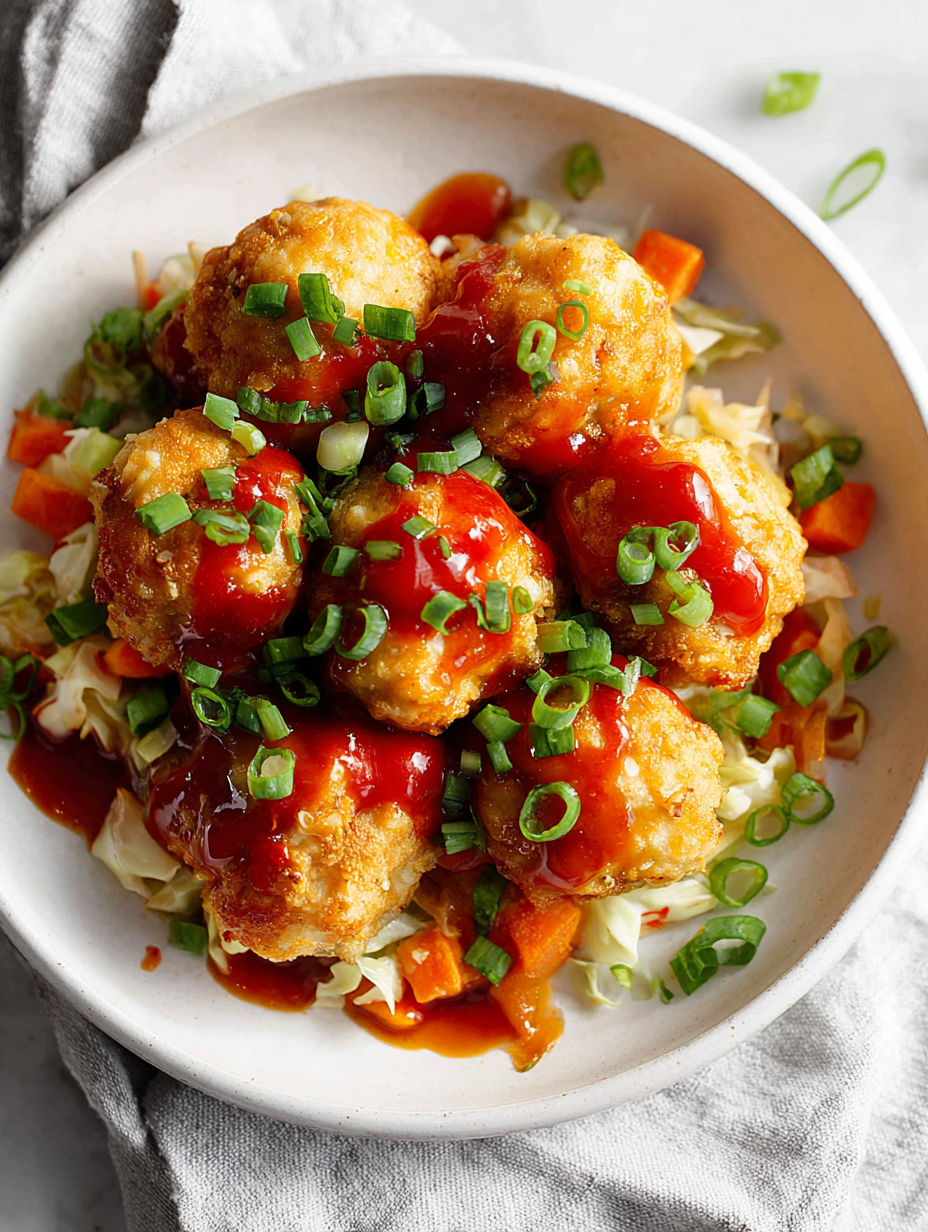
Vegetable Manchurian
Ingredients
Equipment
Method
- Finely chop or grate the cabbage, carrots, and garlic, then place them in a large mixing bowl. Add minced ginger and soy sauce, and stir to combine. Let sit for 10 minutes to soften and meld flavors.
- Sprinkle the cornstarch and dried ginger powder over the vegetable mixture. Mix well until the ingredients hold together and form a sticky, cohesive dough.
- Heat vegetable oil in a deep frying pan or wok over medium heat until shimmering and hot (~180°C/356°F). While the oil heats, shape the mixture into small balls about the size of a walnut, using damp hands to prevent sticking.
- Carefully drop the shaped balls into the hot oil in batches. Fry for 4-5 minutes, turning occasionally, until they are golden brown and crispy on all sides. Use a slotted spoon to remove and drain on paper towels.
- In a small saucepan, heat a teaspoon of oil over medium heat. Add finely chopped garlic and cook until fragrant, about 30 seconds. Pour in soy sauce, tomato ketchup, and rice vinegar, stirring to combine. Simmer for 2-3 minutes until slightly thickened.
- Toss the crispy vegetable balls into the sauce or spoon the sauce over them. Stir gently to coat evenly, then cook for an additional minute to allow flavors to meld.
- Transfer the coated vegetable balls to a serving platter. Garnish with chopped scallions for a fresh, bright finish. Serve immediately while hot and crispy.
Pro tips for perfect Vegetable Manchurian
- Temperature control is key—fry at around 180°C/356°F for crispy, non-greasy balls.
- Chill your mixture before shaping—keeps things firm and easy to handle, reducing mess.
- Use a slotted spoon to gently lift and drain—prevents excess oil and keeps them crispy.
- Add a splash of water to the cornstarch—helps create a sticky, cohesive coating for frying.
- Fry in small batches—avoids overcrowding and ensures even crispness on each ball.
- For a smoky flavor, briefly char the edges of the vegetables before mixing—adds depth to the dish.
- Finish with a quick toss in the sauce—keeps the balls crispy and prevents sogginess.
Common mistakes and how to fix them
- TOO MUCH OIL: Use less oil for frying to prevent greasy balls; drain on paper towels.
- OVER-COOKED: Fry until golden and crisp, not dark or burnt; observe color and crackle.
- UNDER-SEASONED: Taste the sauce before serving; adjust soy or salt for balanced flavor.
- MISSHAPED BALLS: Keep mixture chilled if it’s too sticky; shape with damp hands for ease.
Quick fixes and pantry swaps
- If oil splatters, splash a little water to tame the crackle.
- When balls are too sticky, patch with a light dusting of extra cornstarch.
- Splash lemon juice on the sauce for brightness if it tastes dull.
- When balls aren’t crispy enough, shield with a quick extra fry at higher heat.
- Dumped too much soy? Rinse briefly under cold water and pat dry before frying again.
Prep, store, and reheat tips
- Prepare the vegetable mixture and shape the balls a day in advance; keep chilled in an airtight container for up to 24 hours. The flavors deepen overnight, and the mixture firms up for easier shaping.
- Fried vegetable balls can be stored in a single layer in a container for up to 2 days in the fridge. Reheat in a hot oven or air fryer until crispy and warmed through, about 5-7 minutes, until they shimmer with a slight crackle.
- The sauce can be made ahead and stored in the fridge for up to 2 days. Reheat gently on the stove, stirring occasionally, until the aroma returns and sauce is hot and fragrant.
- For best results, reheat the balls and sauce separately to maintain crispness. Combining too early can make the balls soggy; serve immediately after reheating for optimal crunch.
- Note: The flavors of the dish develop and mellow when stored overnight, so it may taste even better the next day—just reheat with care to preserve texture.
Top questions about Vegetable Manchurian
1. How do I choose the right vegetables?
Look for fresh, firm vegetables with bright colors. They should smell fresh and have a slight crunch when raw.
2. How can I prevent the mixture from sticking?
Use cold water to chill the mixture before shaping. It helps the balls stay firm and less sticky.
3. When are the balls done frying?
Fry until the balls are deep golden and crispy, about 4-5 minutes. They should crackle when you bite into them.
4. How do I know the sauce is ready?
Adjust soy sauce and chili to taste. The sauce should be tangy, savory, with a hint of spice and brightness.
5. Can I bake instead of fry?
Yes, you can bake the balls at 180°C/356°F for 20 minutes until crisp if you prefer less oil.
6. How do I store and reheat leftovers?
Store leftovers in an airtight container in the fridge for up to 2 days. Reheat in an oven or air fryer for best crunch.
7. Can I substitute soy sauce?
Use light soy or coconut aminos for a milder, sweeter flavor. Regular soy provides a rich, umami punch.
8. What’s the best ginger to use?
Fresh ginger adds a sharp, spicy note and energizes the dish. Dried ginger works but is milder and less bright.
9. Why are my balls soggy?
Overcrowding the pan causes sogginess. Fry in small batches to keep everything crispy and evenly cooked.
10. How do I keep the balls crispy?
Use a slotted spoon to drain excess oil immediately after frying, keeping the balls crispy and less greasy.
This Vegetable Manchurian recipe is a nod to those spontaneous street food nights, where the smoky aroma and crunch are everything. Making it at home brings that same imperfect joy—each bite a reminder of how comforting simple, honest food can be.
In times when we crave familiar flavors and a bit of nostalgia, this dish delivers. It’s messy, lively, and full of personality—just like the best memories from back then. Keep it rustic, keep it real, and enjoy every crunchy, tangy bite.

Hi there! I’m Isabella, the founder and curious foodie behind Crumb Detective. I’ve always believed that every dish has a story to tell — from the secret family recipes passed down through generations to the bold experiments happening in kitchens around the world.