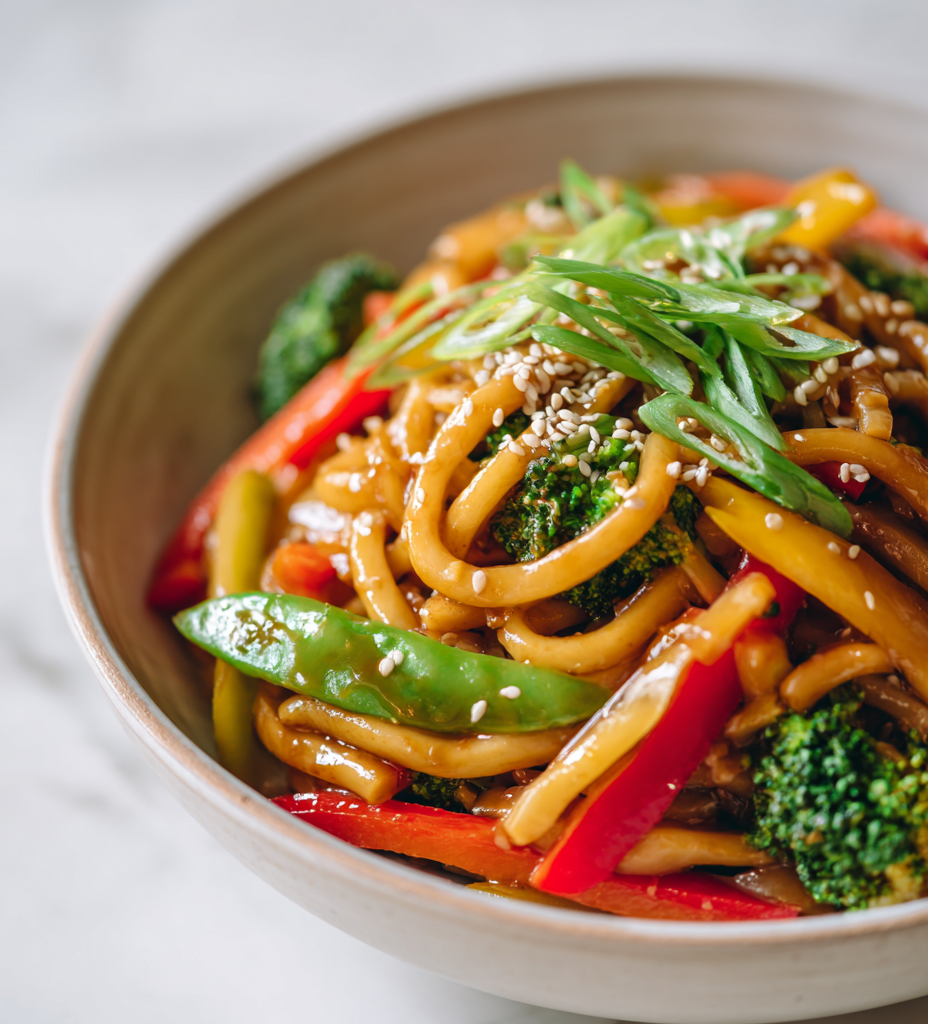

This vegetable udon recipe is all about playing with textures—crisp bell peppers, tender zucchini, and that satisfying chew of thick udon noodles. It’s simple, but paying attention to how each element feels in your mouth transforms an everyday dish into something more satisfying.
I love tossing this together when I want something quick but not boring. It’s a reminder that the little details—like how long you stir fry or how you season—make all the difference. It’s honest cooking, no fuss, just real flavors and textures that keep you coming back.
Plus, it’s flexible. Use what’s in your fridge, tweak the veggies, and focus on balancing that crunch with softness. It’s one of those meals that feels good to make and even better to eat, especially when you want something nourishing and a bit more interesting.
Focusing on the overlooked art of balancing textures—crisp, tender, and chewy—in vegetable udon to elevate the everyday comfort of this dish.
Balancing Textures in Every Bite
- This dish reminds me of rainy afternoons in Tokyo, where street stalls serve steaming bowls of udon with whatever fresh veggies they have—simple, honest, comforting.
- I used to think balancing textures was fussy, but now I see it as the secret to making everyday meals feel special, even when rushed.
- There’s a quiet pride in getting that perfect chew from the noodles and a crisp bite from the bell peppers—it’s a small win that makes cooking feel meaningful.
- Whenever I make this, I feel a little nostalgic for my first trip to Japan, wandering through markets, smelling soy, garlic, and fresh greens mingling in the air.
- Cooking this reminds me that sometimes the best meals come from just paying attention to how things feel and taste, not overthinking it.
The story behind this recipe
- This recipe came about from a weekend spent rummaging through my fridge, trying to use up odds and ends before they went bad. I wanted something quick, vibrant, and satisfying—something that would make me forget I’d been avoiding the grocery store all week. The idea of playing with textures—crisp peppers, soft noodles—came naturally as I chopped and stir-fried. It’s funny how a simple dish can feel like a little act of rebellion against takeout or frozen meals.
- I remember the first time I nailed the perfect balance of crunch and tenderness; the noodles just slightly chewy, the veggies still crisp but heated through. That moment made me realize how much joy there is in paying close attention to the feel of each ingredient. It’s honest cooking, no fuss, just ingredients doing what they’re meant to do, combined with a splash of soy and a dash of sesame oil. This dish became my go-to when I want something nourishing that still feels a little special.
- heading: ‘The story behind this recipe’
Historical & Cultural Roots
- Vegetable udon has roots in Japan’s street food culture, where quick, hearty bowls are a daily staple.
- The dish likely evolved from simple stir-fries, emphasizing fresh veggies and chewy noodles for a satisfying, fast meal.
- Udon noodles, traditionally made from wheat flour, have been a part of Japanese cuisine for centuries, symbolizing comfort and simplicity.
- In recent years, vegetable udon has gained popularity worldwide as a flexible, plant-forward dish perfect for weeknights.
- This dish reflects Japan’s culinary ethos—balancing umami-rich sauces with crisp, fresh vegetables for a harmonious bite.
Key Ingredients & Tips
- Udon noodles: I love the thick, chewy texture that holds up well to stir-frying—just make sure not to overcook them, or they’ll turn mushy and lose that satisfying bounce. Swap for rice noodles if you want a gluten-free version, but keep an eye on cooking time to avoid sogginess.
- Bell peppers: Their bright, crisp bite adds a necessary crunch—slice thin for quick stir-fry. For a smoky flavor, char them slightly before chopping, or use roasted red peppers for a softer, sweeter twist.
- Zucchini: Tender but still firm, zucchini soaks up flavors while staying juicy. Sauté just until slightly golden—overcooking turns it mushy, which you don’t want. You can swap with yellow squash or eggplant if needed, but adjust cook time accordingly.
- Carrots: I prefer julienned for quick cooking and crunch. For more sweetness, toss them in a little honey or sesame oil. If fresh carrots aren’t available, shredded frozen carrots work in a pinch, just drain excess moisture.
- Soy sauce: That umami punch is crucial, but I sometimes mix in a splash of mushroom soy for depth. For a gluten-free option, use coconut aminos, though it’s milder and slightly sweeter. Adjust amount for saltiness to taste.
- Sesame oil: Just a teaspoon adds a toasty, nutty aroma—don’t overdo it, or it’ll overpower the dish. Toasted sesame seeds sprinkled at the end really boost that flavor. For nut allergies, try a light vegetable oil with a touch of sesame paste.
- Green onions: Their sharp, fresh bite brightens everything—add right before serving. If unavailable, chopped chives or parsley give a similar pop of color and freshness.
Spotlight on key ingredients
Udon noodles:
- I love their thick, chewy texture that holds up during stir-fry—just avoid overcooking or they’ll turn mushy and lose that satisfying bounce. Swap for rice noodles if gluten-free, but watch the cooking time to prevent sogginess.
- Bell peppers: Their bright, crisp bite adds a necessary crunch—slice thin so they fry quickly and evenly. For a smoky note, char them slightly before chopping, or use roasted red peppers for a softer, sweeter flavor.
Bell peppers:
- Zucchini: Tender but still firm, zucchini soaks up flavors while staying juicy. Sauté just until slightly golden—overcooking turns it mushy, which you want to avoid. Swap with yellow squash or eggplant if needed, but adjust cooking time.
- ingredient
Notes for ingredient swaps
- Dairy-Free: Swap soy sauce with coconut aminos for a milder, slightly sweeter flavor that’s friendly to all diets.
- Gluten-Free: Use rice noodles instead of udon—just be mindful of cooking time to keep them from turning mushy.
- Vegetable Variations: If you don’t have bell peppers, try snap peas or thinly sliced fennel for different crunch and aroma.
- Oil Choices: Replace sesame oil with toasted walnut or avocado oil if allergies are a concern, but expect a different aroma.
- Sweetener Tweaks: Add a touch of honey or maple syrup if you prefer a hint of sweetness balancing the savory sauce.
- Veggie Boost: Incorporate shredded cabbage or bok choy for extra crunch and freshness, especially good in colder months.
- Herb Swaps: Green onions can be replaced with chopped cilantro or chives to vary the fresh, herbal notes.
Equipment & Tools
- Large wok or skillet: For stir-frying all ingredients evenly at high heat.
- Boiling pot: To cook the udon noodles quickly and efficiently.
- Tongs and stirring spoon: To toss and combine ingredients without breaking noodles.
- Knife and cutting board: To prep vegetables cleanly and uniformly.
Step-by-step guide to vegetable udon
- Gather all equipment: large wok or skillet, boiling pot, tongs, stirring spoon, measuring spoons, knife, and cutting board.
- Boil water in the large pot until it reaches 100°C (212°F). Add a pinch of salt and cook udon noodles for 8-10 minutes, until just tender. Drain and set aside.
- Prep vegetables: slice bell peppers into thin strips, julienne zucchini and carrots, chop green onions finely, and set aside.
- Heat the wok over medium-high heat (around 200°C/390°F). Add 1 tablespoon sesame oil, swirling to coat.
- Add bell peppers and carrots first. Stir-fry for 2-3 minutes until slightly softened and fragrant, with a hint of caramelization. Remove and set aside.
- In the same wok, add another teaspoon sesame oil. Toss in zucchini and cook for 1-2 minutes until just tender but still crisp. Remove and set aside.
- Add a splash more oil if needed. Toss in cooked noodles, soy sauce (2-3 tablespoons), and a teaspoon of sesame oil. Stir vigorously for 1-2 minutes until evenly coated and heated through.
- Return the sautéed vegetables to the wok. Toss everything together for another minute, letting flavors meld and veggies stay crisp.
- Taste and adjust soy or sesame oil if needed. Remove from heat. Garnish with chopped green onions and toasted sesame seeds.
- Plate the udon immediately. Rest for 1-2 minutes to allow flavors to settle before serving.
Serve immediately while hot. Garnish with green onions and sesame seeds. Rest for 1-2 minutes to let flavors settle. Enjoy the crisp-tender vegetables contrasted with chewy noodles.
How to Know It’s Done
- Noodles are tender with a slight bounce when pressed, not mushy.
- Veggies are vibrant, crisp, and slightly caramelized at edges.
- Sauce is glossy, well-coated, with a balanced savory aroma.
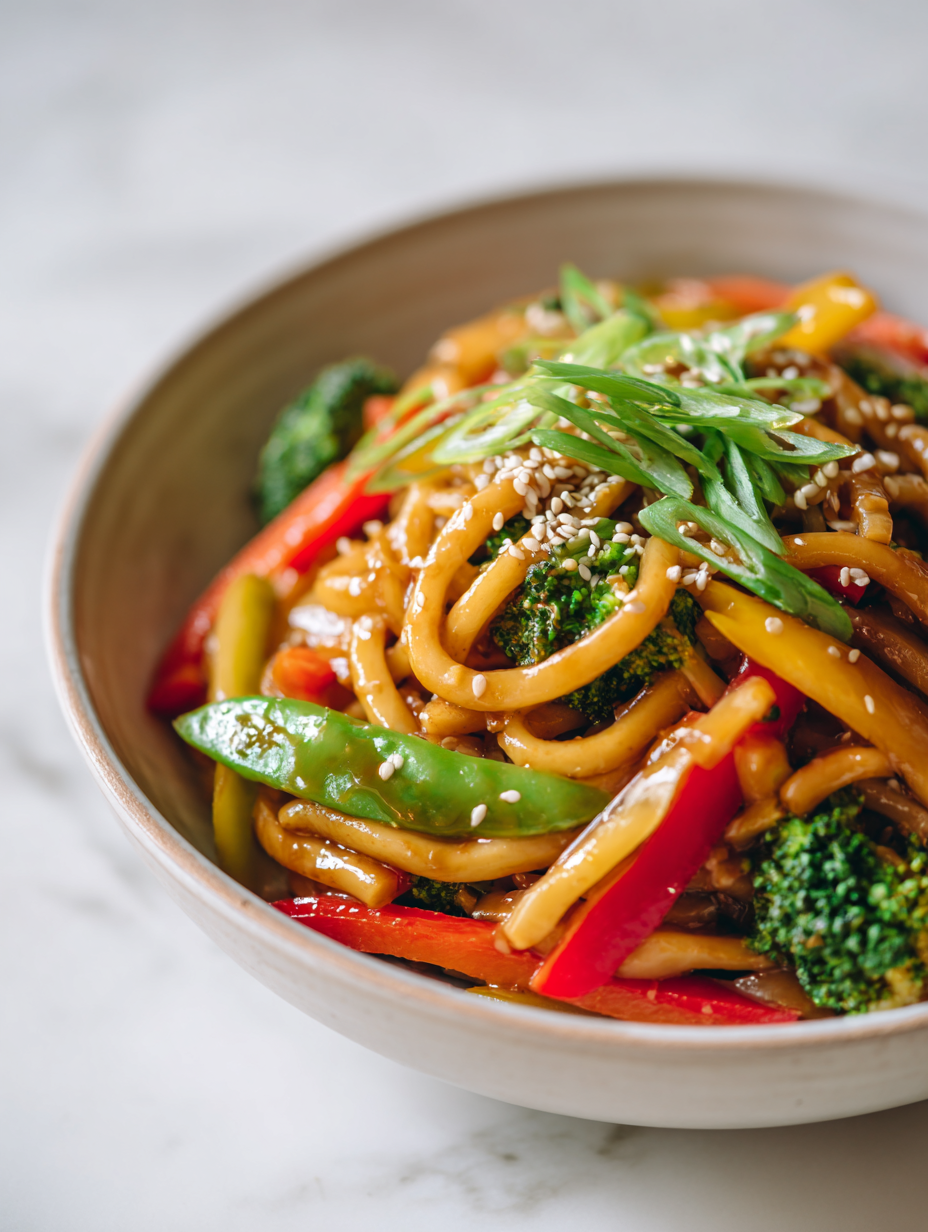
Vegetable Udon Stir-Fry
Ingredients
Equipment
Method
- Bring a large pot of water to a boil, add a pinch of salt, and cook the udon noodles for 8-10 minutes until just tender. Drain and set aside.
- While the noodles cook, prepare your vegetables: thinly slice the bell pepper, julienne the zucchini and carrots, and chop the green onions. Have everything ready for quick stir-frying.
- Heat your wok or skillet over medium-high heat until hot. Add a tablespoon of oil, swirling to coat the surface.
- Add the sliced bell peppers and julienned carrots. Stir-fry for about 2-3 minutes until they start to soften and become fragrant, with edges just beginning to caramelize.
- Push the vegetables to one side of the wok, then add a little more oil if needed. Toss in the minced garlic and cook for about 30 seconds until fragrant, stirring constantly to prevent burning.
- Add the julienned zucchini to the wok and stir-fry for 1-2 minutes until just tender but still crisp and bright green.
- Once the vegetables are cooked to your liking, add the drained udon noodles to the wok. Pour in the soy sauce and drizzle with sesame oil.
- Use tongs or a stirring spoon to toss everything together vigorously, ensuring the noodles are evenly coated and heated through—about 1-2 minutes. The dish should be glossy and aromatic.
- Return the stir-fried vegetables to the wok and toss again for a quick 30 seconds, letting the flavors meld and veggies stay crisp.
- Remove from heat, transfer to serving bowls, and garnish with chopped green onions for a fresh pop of flavor and color.
- Serve immediately while hot, enjoying the satisfying crunch of peppers and the chewy texture of the noodles with every bite.
Notes
Pro tips for perfect vegetable udon
- Use high heat to get a quick sizzle—your veggies will sear and develop flavor faster.
- Keep noodles slightly undercooked; they’ll finish cooking with the stir-fry and stay chewy.
- Toss veggies in small batches; overcrowding causes steaming instead of frying, losing crispness.
- Add soy sauce in stages—start with half, taste, then adjust—to build depth without overpowering.
- Use tongs for tossing; they help keep noodles intact and evenly coated without breaking.
Common mistakes and how to fix them
- FORGOT to adjust heat → use medium-high to prevent burning while stir-frying.
- DUMPED noodles too early → wait until just tender, then drain thoroughly to avoid sogginess.
- OVER-TORCHED veggies → stir constantly and remove from heat once edges are caramelized.
- MISSED seasoning balance → taste and adjust soy or sesame oil before serving for full flavor.
Quick Fixes & Pantry Swaps
- If noodles stick together, splash cold water and toss gently to separate.
- When veggies are overcooked, quickly stir in fresh, crunchy slices to revive texture.
- Splash soy sauce if flavor is too mild—smell should turn savory and inviting.
- Patch a burnt bottom by removing noodles and cooking a new batch, then reassemble.
- Shield delicate veggies with a quick rinse in ice water to stop cooking and retain crispness.
Prep, store, and reheat tips
- Prep vegetables like peppers, zucchini, and carrots up to a day ahead; store in airtight containers in the fridge for crisp freshness.
- Cook and drain udon noodles ahead—keep them in a sealed container for up to 24 hours; reheat briefly in hot water to restore bounce.
- Sauce can be mixed in advance; refrigerate for up to 2 days, but expect the flavors to deepen and mellow over time.
- Reheat stir-fry in a hot skillet or wok for 1-2 minutes, shaking frequently; noodles should shimmer and veggies stay crisp but tender.
- For best flavor, add fresh green onions and sesame seeds just before serving to keep their bright aroma and crunch.
Top questions about vegetable udon
1. How do I prevent the noodles from overcooking?
Use firm, fresh udon noodles and avoid overcooking them; they should be chewy but not mushy.
2. What’s the best way to keep vegetables crisp?
Stir-fry vegetables on high heat until crisp-tender, about 2-3 minutes for peppers and carrots, 1-2 for zucchini.
3. How much soy sauce should I use?
Add soy sauce gradually, tasting as you go, to prevent the dish from becoming too salty or overpowering.
4. Can I use a smaller pan for this recipe?
Use a large wok or skillet to give veggies space to fry quickly and develop flavor without steaming.
5. How do I know when the noodles are perfectly cooked?
Cook noodles just until tender, then drain thoroughly to avoid excess moisture that makes the dish soggy.
6. What vegetable alternatives work well?
You can substitute bell peppers with snap peas or shredded cabbage for different crunch and color.
7. How do I keep sesame seeds fresh and flavorful?
Toast sesame seeds just before serving to maximize aroma and crunch—add at the last moment.
8. Any tips for stir-frying on high heat?
Use high heat and quick tossing to prevent burning and ensure veggies stay crisp and vibrant.
9. How do I reheat vegetable udon without losing texture?
Reheat leftovers in a hot skillet or wok for 1-2 minutes, adding a splash of water if needed to loosen.
10. How can I enhance the texture of leftovers?
Balance textures by adding crunch with fresh green onions or chopped nuts just before serving.
This vegetable udon recipe feels like a little rebellion—something you make when you want honest flavors and textures that surprise you. It’s not about perfection, but about capturing the joy of balancing crunch with chew, bright veggies with hearty noodles.
Whenever I come back to this dish, I remember it’s the small details—like a quick stir or a splash of soy—that turn simple ingredients into a satisfying meal. It’s a reminder that good cooking doesn’t need fuss, just a little attention and a lot of flavor.

Hi there! I’m Isabella, the founder and curious foodie behind Crumb Detective. I’ve always believed that every dish has a story to tell — from the secret family recipes passed down through generations to the bold experiments happening in kitchens around the world.